What is your idea? How to choose the right comedy format
One of the most common questions we get at GOLD is: “I have an idea, but I don’t know what it is yet.”
Maybe it’s a story about your dog learning to wash dishes. Maybe it’s an observation about pigeons. Maybe it’s a character you’ve been doing for your niece. Maybe it’s that thing you’ve been talking about so much that your friends have started saying, “Okay, you need to write that.”
But before you decide what you’re writing, it helps to figure out how people are supposed to experience the idea.
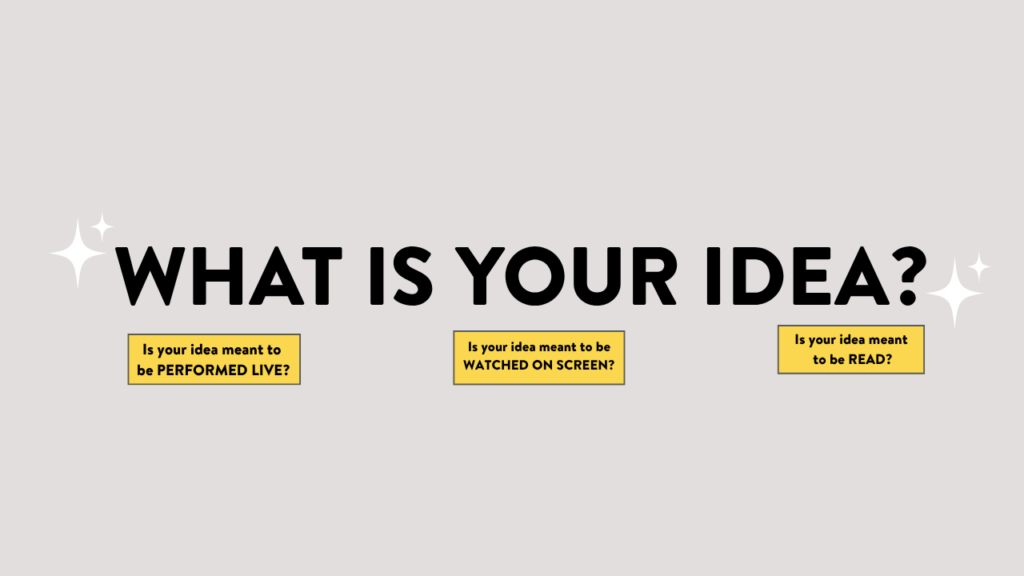
That’s what this flow chart is trying to do. It won’t tell you exactly what to make. But it will help you to stop forcing an idea into the wrong container.
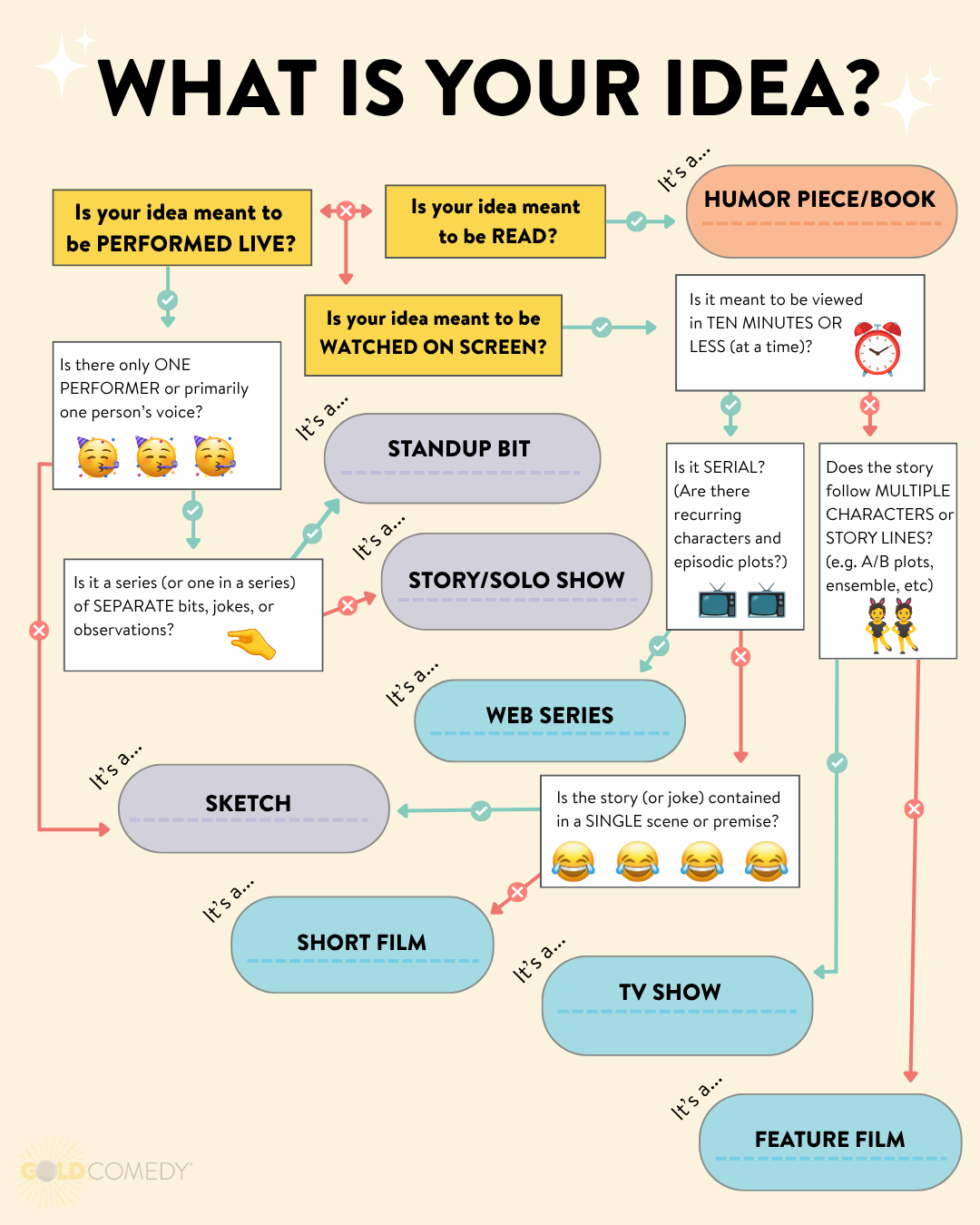
First: How does this idea want to meet an audience?
If someone encounters this idea for the very first time, are they reading it on their way to work? Watching it after dinner? Giving you live laughs?
It sounds obvious, but you’d be surprised how many ideas become easier to understand when you start there. I’ve seen people spend months trying to develop a pilot before realizing what they actually had was a killer solo show. I’ve seen people outline a feature film when the thing they were most excited about was really one very strong sketch premise. I’ve also seen people try to build a sketch around an idea that clearly wanted to become a series. Most often people hit a wall between TV series and feature film. Don’t sweat it. We got you, babe.
It’s important to remember that the medium isn’t just packaging. It affects everything from structure to pacing to what kind of audience you’re trying to reach. Certain ideas will thrive in one medium and crash out in another.
A good clue: What happens when you tell people about it?
Next time you’re excited about an idea, pay attention to how you naturally pitch it.
- Do you immediately start telling jokes?
- You might have your best new standup bit.
- Do you start recounting a specific experience from your life with a beginning, middle, and end?
- That’s often the seed of a storytelling piece or solo show.
- Are you jumping between points of view or plot lines?
- Now we’re joyriding into TV territory.
Most of us accidentally reveal these secrets (to others and ourselves) before we ever sit down to write. Your idea will often pull you–automatically–in the right direction. With practice it’ll happen this way more and more. But even the most experienced comedy pros have to PRESSURE TEST their ideas to find the right medium.
The TV show vs. film question
This is the one that trips people up most often.
Someone has a story and assumes it should be a TV show because TV feels hipper. Or someone has a story and assumes it should be a film because film feels BIG.
But the kinds of stories for film and the kinds of stories for TV…NOT the same.
A question I love asking is:
Are there multiple main characters/storylines?
Not in a vague way. Specifically. Will you be cutting between a story about Lina Marshall (mother, wife, secret agent) and Harvey Bolton (father, husband, football coach)? Television needs that back and forth.
TV loves A plots, B plots, side characters, workplace dynamics, family dynamics, romantic dynamics—lots of people wanting lots of things at the same time. It’s central to the pacing and format of television shows. (YES, there are exceptions. NO, it doesn’t mean your film idea would definitely still work as TV.)
If your story keeps pulling you back to one central journey, congrats! It’s a film (up to you whether you want to use pink or blue balloons for this). If your notebook is full of supporting characters who are demanding their own freaky little journies, that’s a strong sign that you’re about to make TV.
Web series are not just tiny TV shows
A lot of people treat web series like the kiddie pool version of television. They’re not. A good web series usually succeeds because it embraces brevity. The episodes are short because the idea works best that way.
If someone can watch one episode while waiting for their coffee and immediately want another, you’re in a good place.
The key question is whether the world continues beyond a single installment. Recurring characters? Recurring situations? A premise that can generate multiple episodes?
That’s web series territory.
Try this before writing 100 pages
Whenever you’re stuck, give yourself permission to make the smallest version first.
Instead of outlining a season, write one scene. Instead of planning a feature, write a short. Instead of mapping out a memoir, write one humor piece. Instead of developing an hour-long solo show, tell the story at an open mic.
You’ll learn more from creating ten minutes of something than from spending three months trying to decide what genre it belongs in. The nice thing about creative work is that formats aren’t permanent.
Sketches become movies. Articles become books. Solo shows become TV series. Web series become streaming deals.
Your first job isn’t to predict where the idea will end up. It’s to figure out where it wants to start.
The good news? You don’t have to figure it out alone. Whether you’re developing a sketch, standup bit, pilot, humor piece, or solo show, GOLD offers classes, feedback, and community to help you discover what your idea wants to become. Start your 14-day free trial today.